Motorised vs Manual Zip Screens: Which Is Right for You?
Once you've decided on zip screens, the next choice is how you'll raise and lower them. There are three options: spring, crank and motorised. The right one depends on how many screens you have, how big the openings are and how often you'll use them.
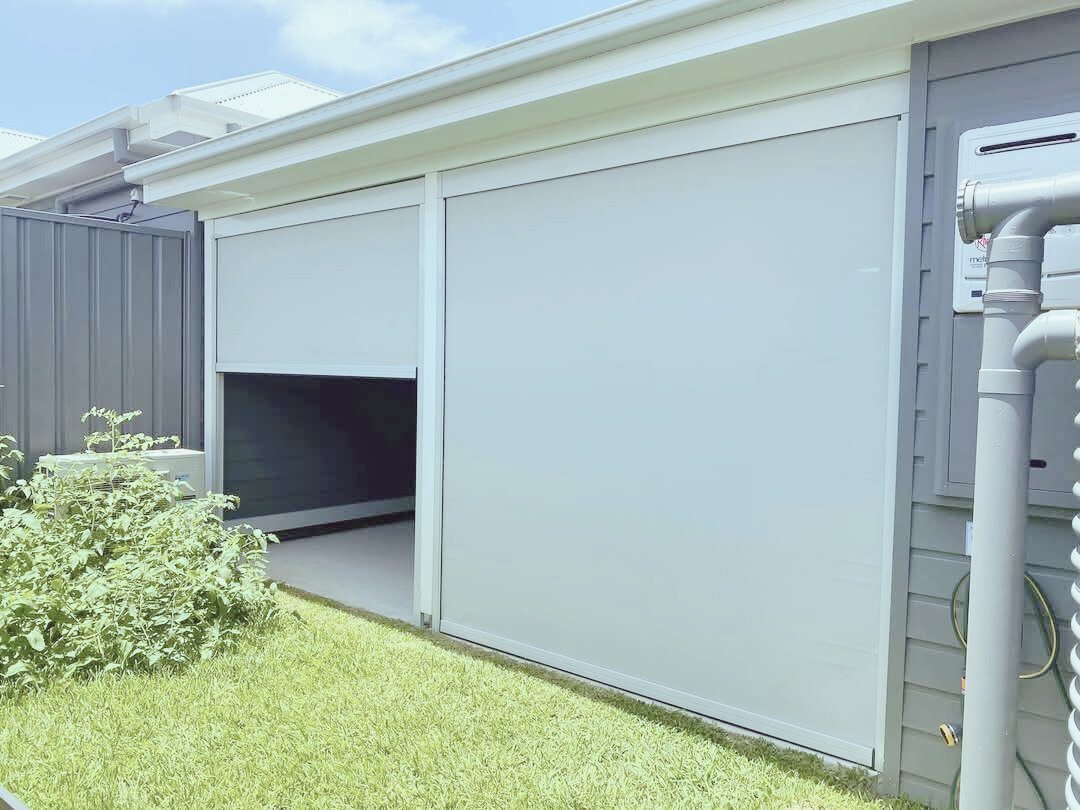
All three run in the same side channels that give zip screens their tight, gap-free seal, and all three can be made with sunscreen mesh or waterproof fabric. The difference is purely in how the screen moves.
How does a spring operated zip screen work?
The screen is balanced by a spring in the roller. You pull it down by the bottom bar and it locks at the height you want. To raise it, you release it and guide it back up.
It's simple, quiet and the lowest cost of the three. Spring operation is best for a single, easy-to-reach opening that you won't open and close every day, such as a small side patio or a screen you mostly leave down through summer.
What about crank operated zip screens?
A handle turns a gearbox to wind the screen up and down. It gives more control on larger screens and holds the screen firmly at any height, so you can set it half way for afternoon sun and it stays put.
Crank operation is a good middle ground if you want manual operation on a wide opening. The trade-off is time: winding a large screen takes a bit of effort, and doing it on several screens adds up.
How do motorised zip screens work?
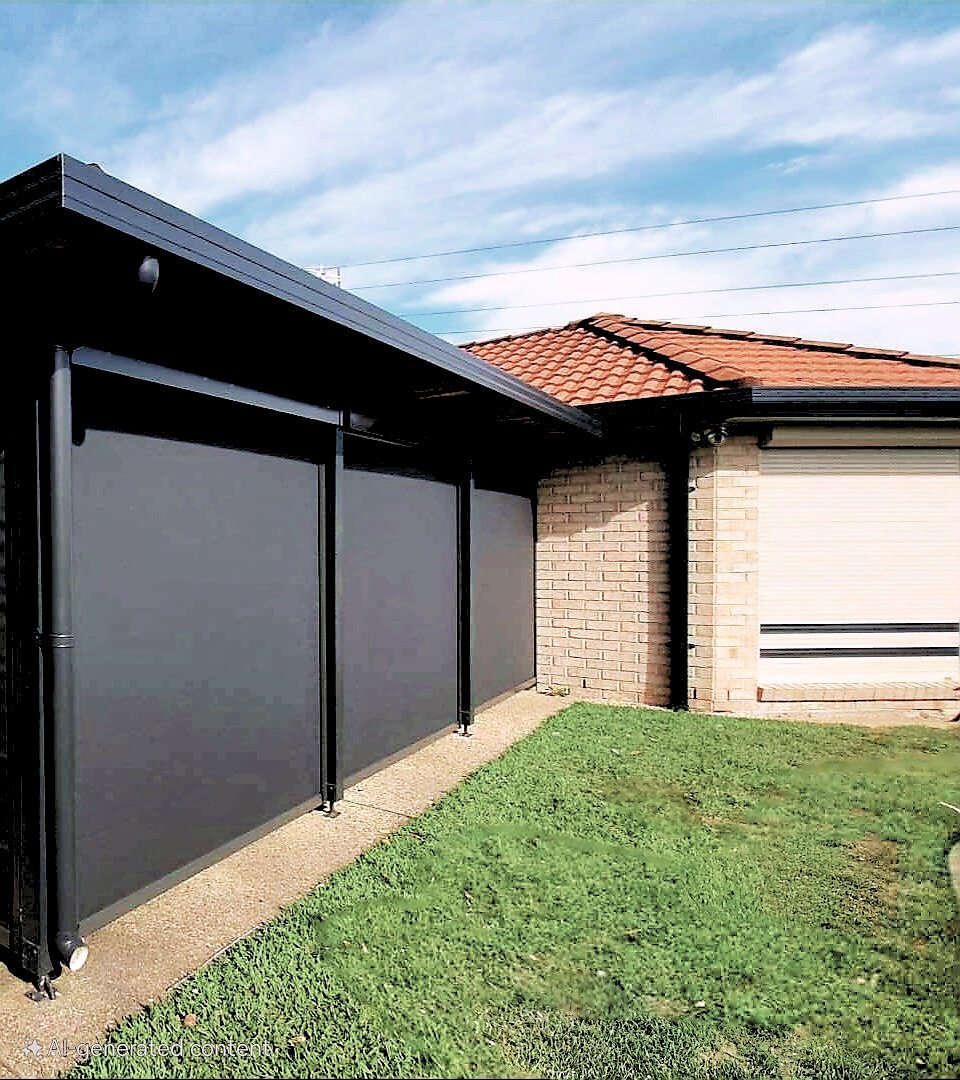
A motor inside the roller does the work at the press of a button, a wall switch or your phone. You can group several screens to move together, so a whole alfresco area can be closed in one go.
Because there's no handle or pull bar to reach, motorised screens also suit tall openings and spots that are awkward to get to, like the far side of an outdoor table or a raised deck.
How do they compare?
- Ease of use: motorised wins, especially with several screens or tall openings.
- Storms: motorised screens can be dropped from inside in seconds when a summer storm rolls in. Some can be linked to a wind sensor.
- Cost: spring is cheapest, then crank, then motor.
- Reliability: all three are reliable when they're measured and installed properly.
- Power: motors need a power point or a hardwired connection near the screen, so it's worth talking this through at the measure.
Which option do most people choose?
Homes with one small screen often go spring. Anyone with two or more screens, or a large alfresco, usually goes motorised, because lowering three screens by hand every afternoon gets old fast.
Crank tends to suit people who want a manual screen on a wider opening and like the firm, precise control of a gearbox.
Around Newcastle and Lake Macquarie, afternoon westerly sun and quick summer storms are the two things that push many households towards motorised. If you're at work when the weather turns, or you simply want the patio closed without walking around the outside of the house, a motor makes the screens something you actually use every day.
Does the choice change for different spaces?
It can. A few common situations we see:
- Small courtyard or side patio: one screen, easy reach, used now and then. Spring is usually plenty.
- Wide single opening: crank gives good control without the cost of a motor.
- Alfresco with three or four sides: motorised, grouped to move together.
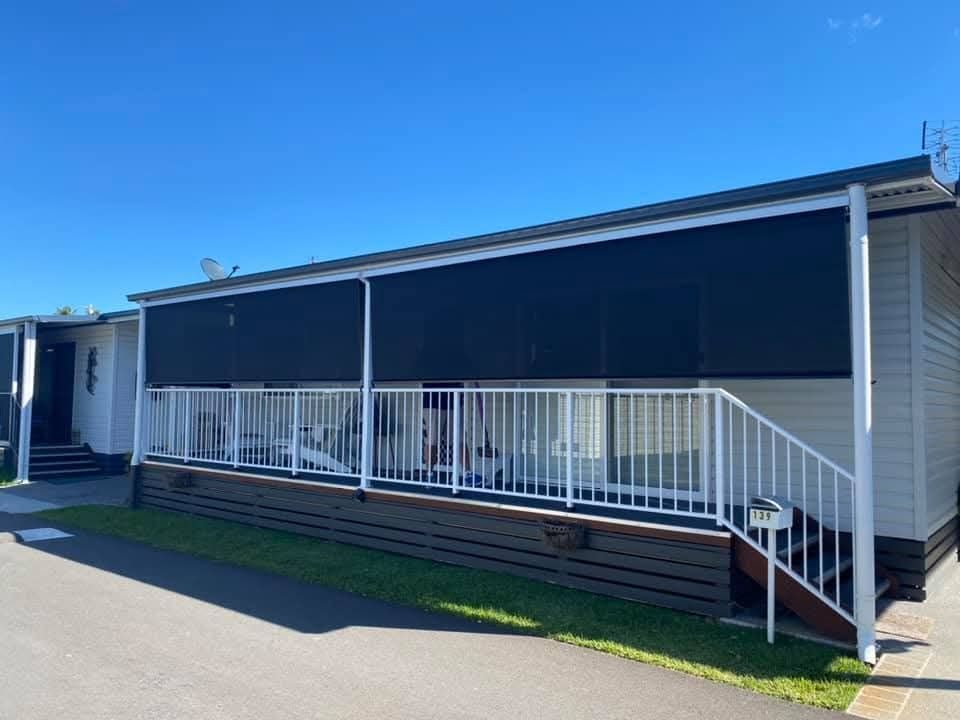
- Raised deck or tall pergola: motorised, because the top of the screen can be hard to reach safely.
If you're still weighing up whether a zip screen is the right product at all, it's worth comparing it with straight drop awnings and our wider range of outdoor blinds. For shade over a window or deck rather than an enclosed space, automatic awnings are another option.
Can I upgrade to motorised later?
Often, yes, but it's cheaper to motorise at the start than to swap later. Planning the power at the time of install also means cabling can be kept neat and out of sight.
How long does it take to get zip screens installed?
Every screen is made to measure, so allow about 3 to 4 weeks from measure to install whichever operation you choose. If you want your screens in before Christmas, orders cut off in early December.
How do I work out the right option for my home?
At your free in-home measure, Kyle will look at your openings and power, show you each option working and include it in a fixed written quote. CBI Blinds is family and veteran owned, fully mobile and based in Warners Bay, and Kyle personally measures and installs every job across Newcastle, Lake Macquarie, the Hunter and Port Stephens.
Ready to compare spring, crank and motorised on your own patio? Book your free in-home measure and quote and Kyle will bring samples to you.
Frequently asked questions
Are motorised zip screens worth the extra cost?
For most homes with two or more screens, a large alfresco or tall openings, yes. Lowering several screens by hand every day gets tiresome, and a motor lets you close them all from inside in seconds when a storm arrives. For a single small screen, spring operation is usually enough.
Do motorised zip screens need an electrician?
Motors need a power point or a hardwired connection near the screen. Kyle will check your power at the free in-home measure so you know what's needed before you commit.
Can I motorise a manual zip screen later?
Often, yes, but it's cheaper to motorise at the start than to swap later, and planning power at install keeps the cabling neat.
What is the difference between spring and crank zip screens?
A spring screen is pulled down by the bottom bar and locks at your chosen height, which is simple and the lowest cost. A crank screen uses a handle and gearbox, giving firmer control on wider screens and holding at any height.
How long do zip screens take to install?
Zip screens are made to measure, so allow about 3 to 4 weeks from measure to install. Christmas orders cut off in early December.