Zip Screens vs Straight Drop Awnings: Which Suits Your Patio?
Zip screens and straight drop awnings look similar when they are down. Both drop vertically from the top of an opening, both cut heat and glare, and both come in spring, crank or motorised versions. The difference is at the edges, and that decides how each one handles wind, rain and bugs.
Here is how they compare for patios, verandahs and windows across Newcastle and Lake Macquarie, and how to decide which suits each opening.
What is the main difference between them?
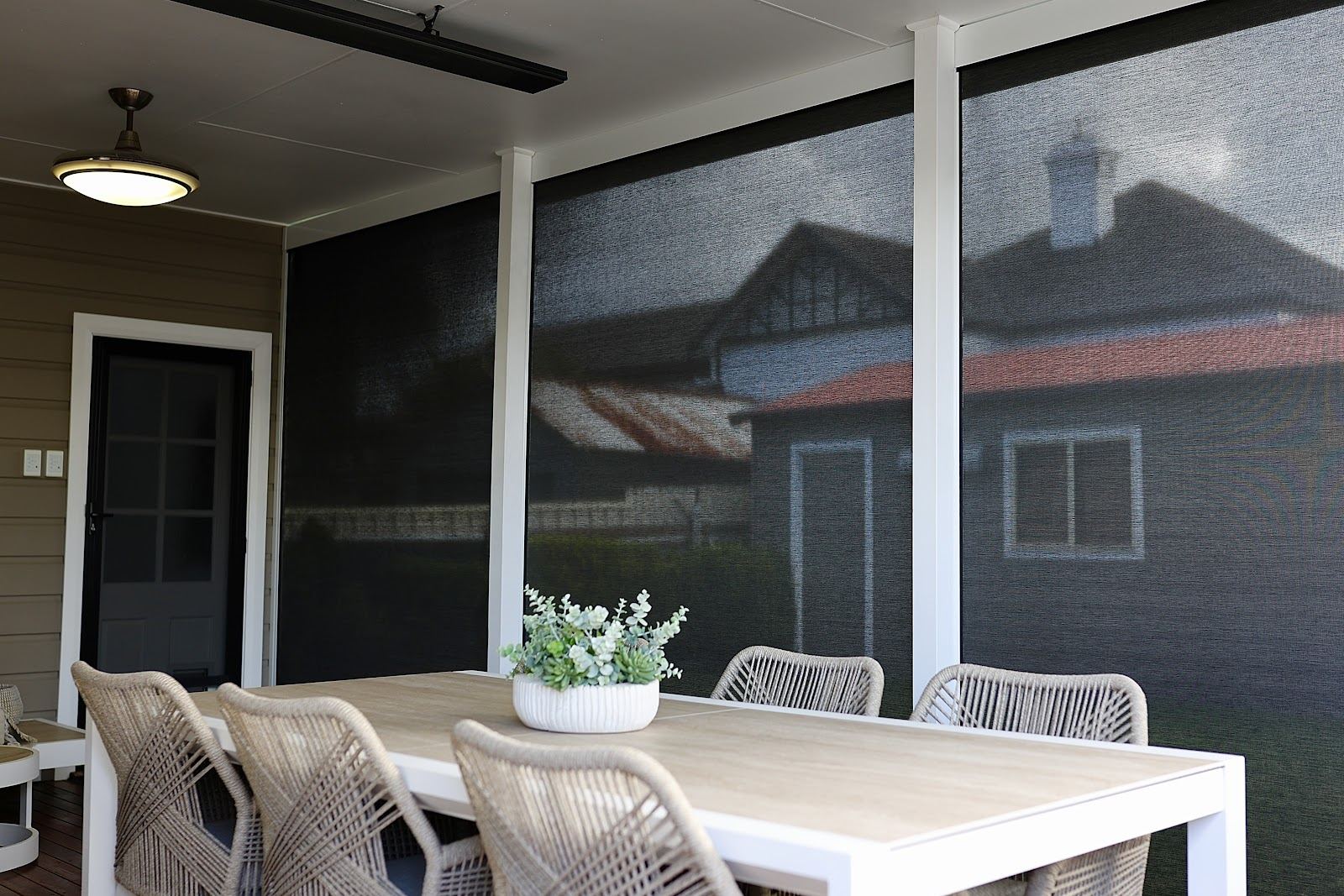
Zip screens run inside aluminium side channels from top to bottom. The fabric edge is locked into the track the whole way down, so there is no gap at the sides and the screen stays tight.
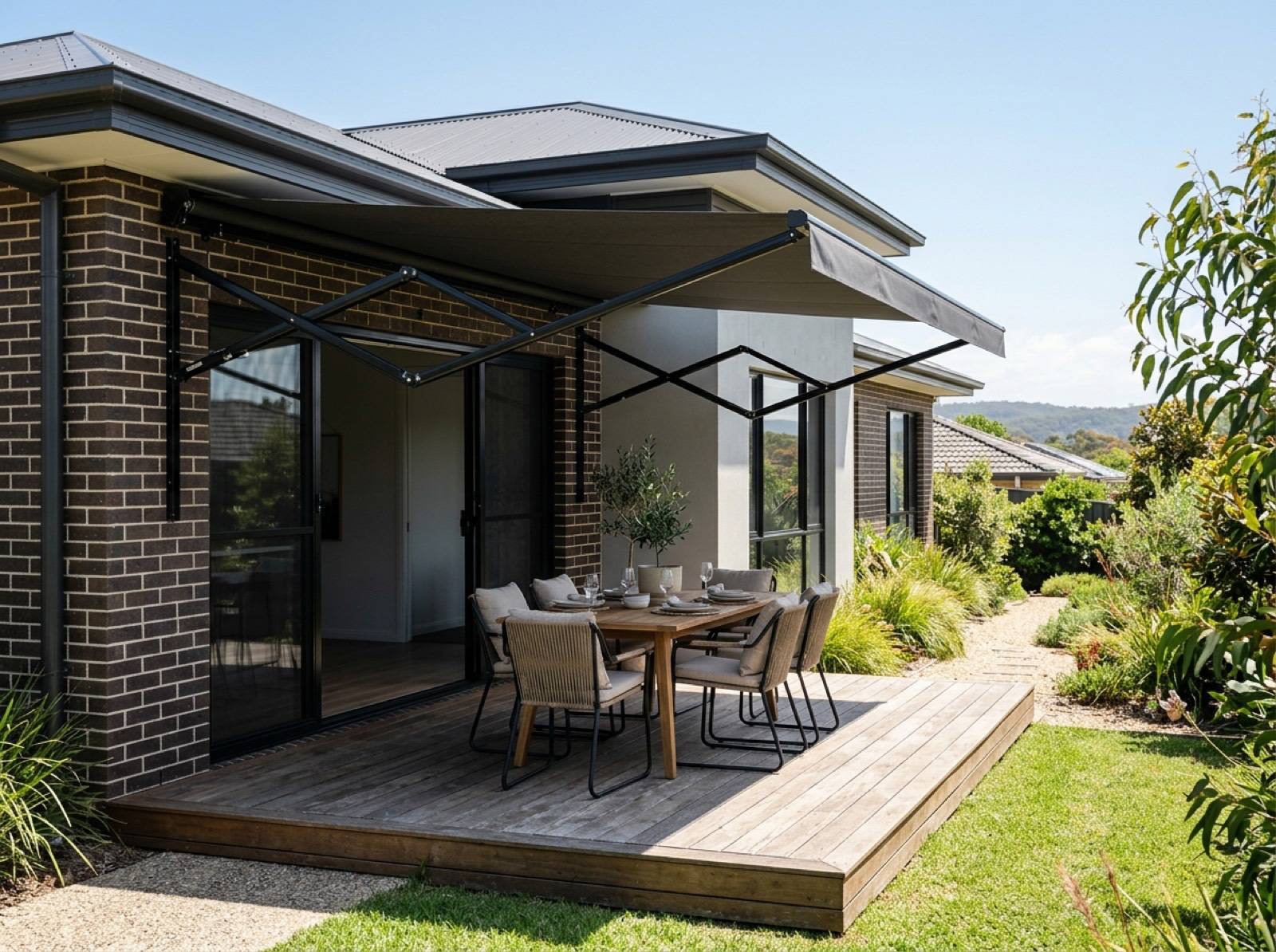
Straight drop awnings drop from a roller at the top without full height side tracks. Depending on the opening, the bottom rail is guided by arms or secured with lock down fixings, which holds it in place without enclosing the sides. They are a practical choice where full side tracks are not needed.
Which handles the wind better?
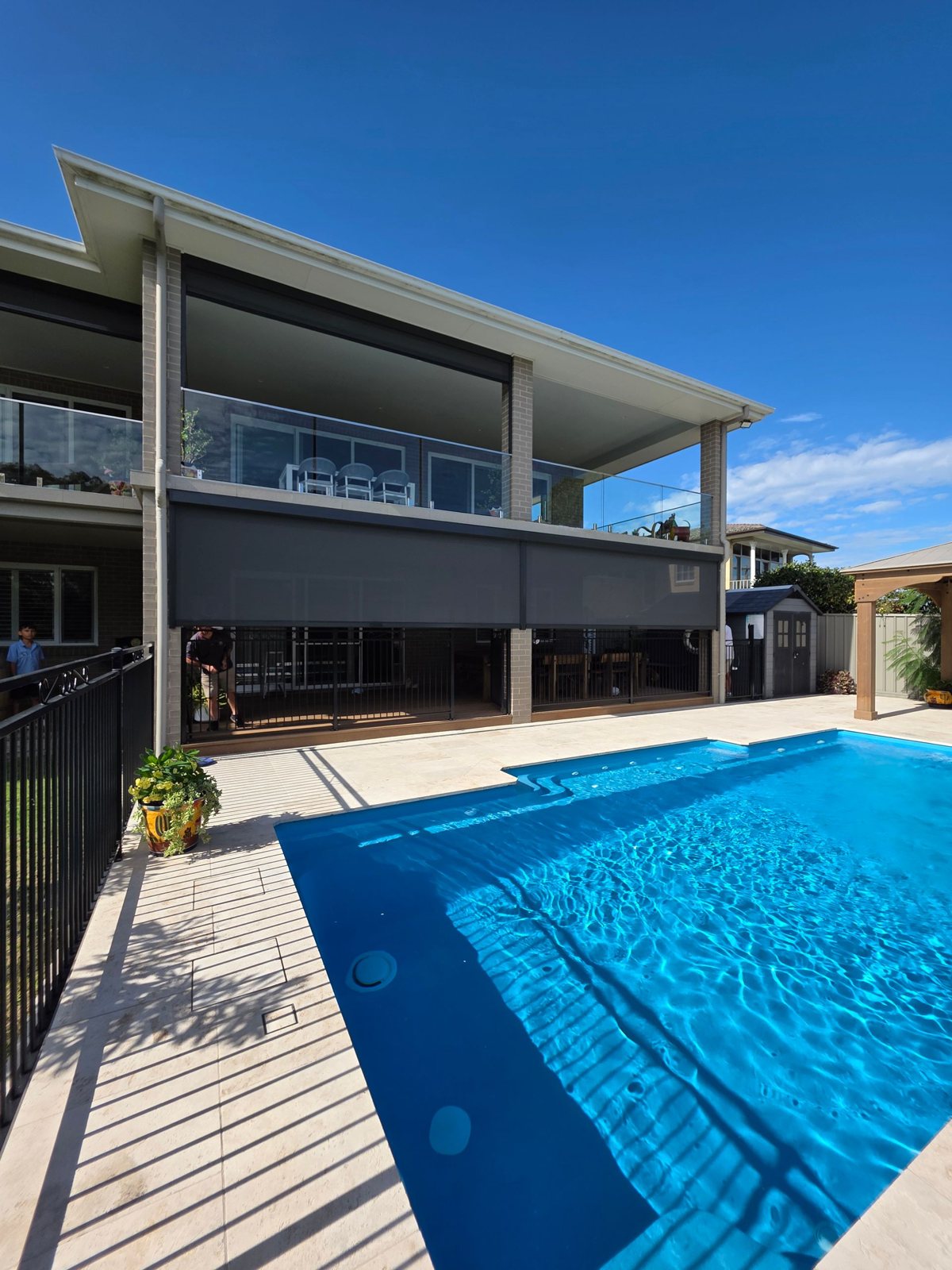
Zip screens, clearly. Because the fabric is held along its full height, it stays tight and quiet in a southerly instead of billowing. That matters on exposed patios, upstairs decks and anything facing the lake or the coast.
A straight drop awning is held at the top and bottom only, so in strong wind the fabric can move and the sides open up. In sheltered spots that is rarely a problem, and straight drop awnings do good service on side verandahs and windows that never see much wind.
What about gaps, rain and insects?
- Side gaps: zip screens have none, while straight drop awnings leave a small gap down each side.
- Wind-driven rain: the side tracks on a zip screen stop sideways rain far better.
- Bugs: a closed zip screen leaves far fewer gaps for mozzies to find at dusk.
- Airflow: both let air through with a mesh fabric, and a straight drop awning keeps a little more movement at the edges.
If you want to close in an alfresco and use it as an outdoor room, zip screens are the right product. If you just want to take the edge off the afternoon sun, a straight drop awning often does the job.
What drives the cost of each?
The same things move the price of both: the size and number of openings, the fabric, and whether you choose spring, crank or motorised operation. The install matters too, including what you are fixing into and how square the posts and beams are.
A straight drop awning is the lighter option on the same opening, with no full height side channels to make and fit, and your written quote can price both so you can compare. Our guide to zip screen cost in Newcastle has a rough market range. The only reliable figure for your home comes from a measure and a fixed written quote.
How do they look on the house?
Zip screens give a clean, built in look. The slim side tracks frame the opening, and when the screen is up the fabric tucks away in a headbox. On a modern alfresco or a new build they read as part of the house.
Straight drop awnings are lighter and simpler to look at, with no tracks down the sides. They suit older homes, weatherboard verandahs and windows where you want shade without adding a frame. Both come in a range of mesh colours to suit your home.
Which is better for windows?
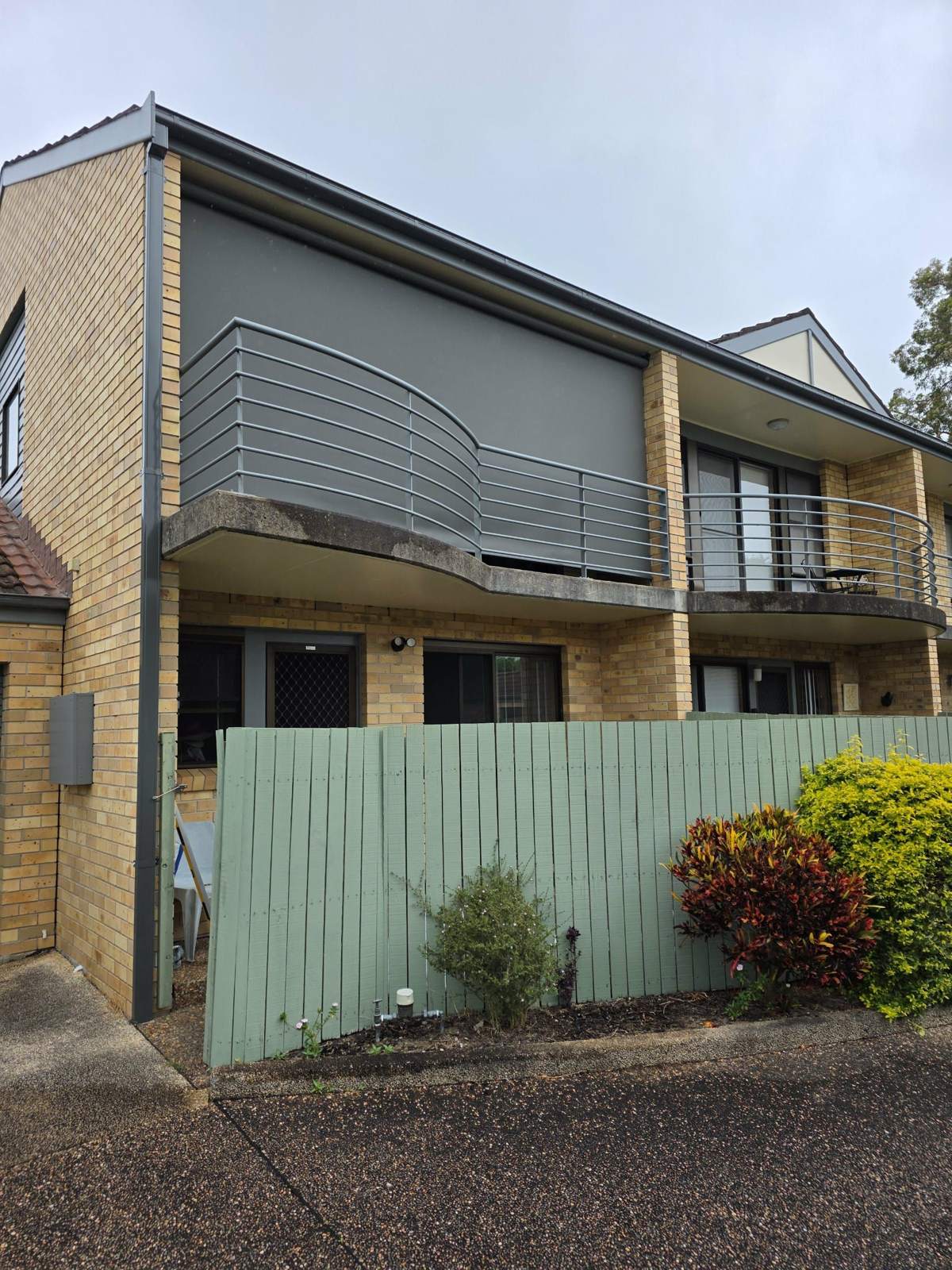
For a window that cops the western sun, a straight drop awning is often the simplest way to stop heat before it reaches the glass. On an exposed upstairs window, a zip screen holds up better in the wind. Automatic awnings are another option for windows, extending to shade the glass and retracting when you want the view and light back.
Can I use both on the same home?
Yes, and plenty of homes do. A common setup is zip screens on the exposed sides of the alfresco and straight drop awnings on sheltered windows and the side verandah. You get full protection where the weather hits and a lighter option where it does not. Our outdoor blinds page shows the full range.
How do I decide for each opening?
- Faces the wind, the lake or the coast? Zip screen.
- Want to keep rain and bugs out and use the space at night? Zip screen.
- Sheltered window or verandah, mainly for sun? Straight drop awning.
- Want simple, lighter shade on a calm side? Straight drop awning.
How long does installation take?
Zip screens are made to measure and take about 3 to 4 weeks from measure to install, with Christmas orders cutting off in early December. Lead times for straight drop awnings are confirmed with your quote, and both are covered by the CBI Blinds 5 year warranty.
CBI Blinds is based in Warners Bay and fully mobile across Newcastle, Lake Macquarie, Maitland and the Hunter, and Port Stephens. Book a free in-home measure and quote and Kyle will look at how each opening faces the weather, show you both products and give you a fixed written quote.
Frequently asked questions
What is the difference between a zip screen and a straight drop awning?
A zip screen runs in aluminium side channels from top to bottom, so there are no side gaps. A straight drop awning drops from a roller without full height side tracks, with the bottom held by arms or lock down fixings.
Which is better in the wind?
Zip screens. The fabric is held along its full height, so it stays tight and quiet in a southerly. A straight drop awning is held at the top and bottom only, so it suits sheltered patios, verandahs and windows better than exposed spots.
Are straight drop awnings cheaper than zip screens?
A straight drop awning is the lighter option on the same opening, with no full height side channels. For both, the price depends on size, number of openings, fabric, operation and install. A fixed written quote can price both so you can compare.
Can I have zip screens and straight drop awnings on the same home?
Yes. A common setup is zip screens on the exposed sides of the alfresco and straight drop awnings on sheltered windows and verandahs, so you get full protection where the weather hits and a lighter option elsewhere.